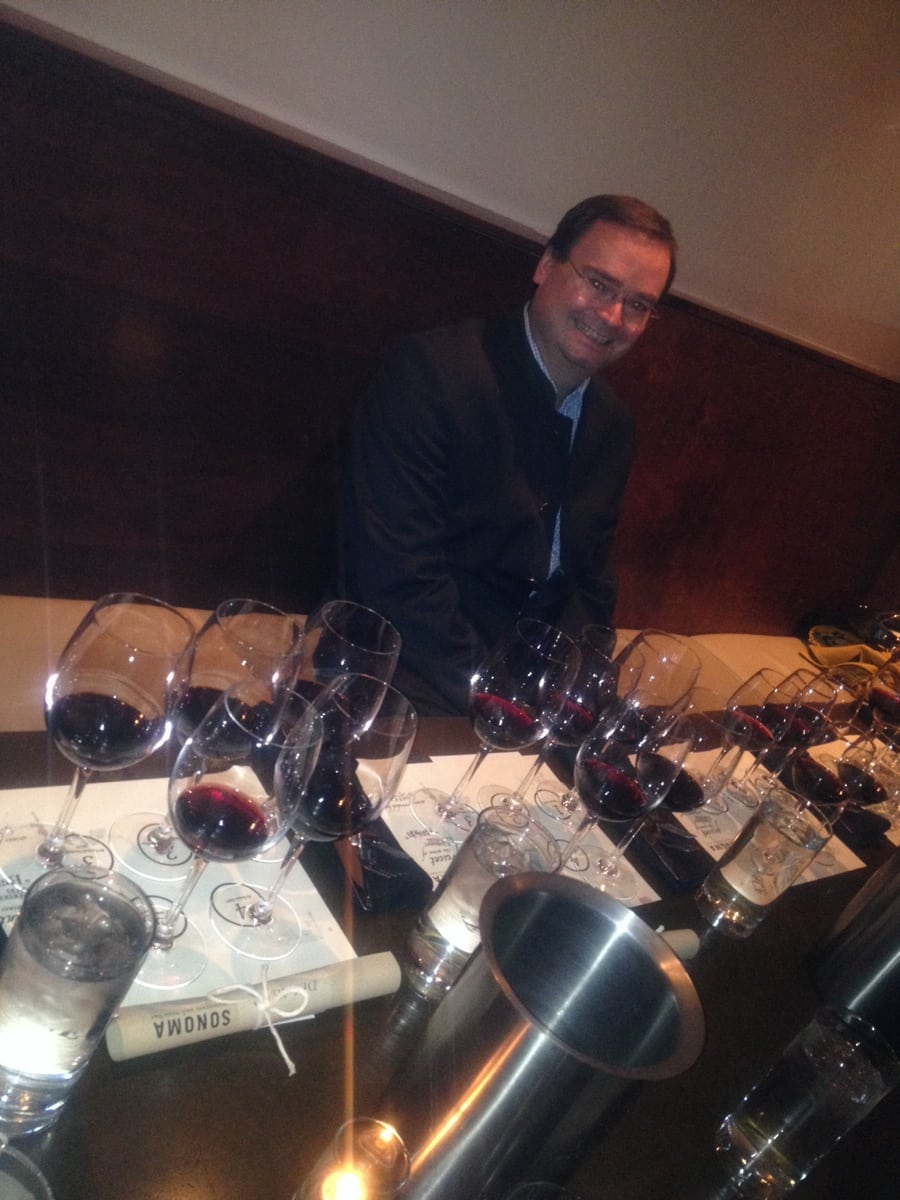
I really enjoyed this event with a family member of the Braida Winery in attendance – wine expert Norbert Reinisch, Braida’s Export Manager and Founder’s Son-In-Law. The tasting included Braida’s current releases of Montebruna, Il Baciale, Moscato d’Asti and Brachetto d’Acqui..But we also got to taste multiple vintages of Bricco dell’Uccellone and Ai Suma in a pre-dinner wine tasting that was fabulous! Norbert has in interesting personal story: he’s actually Austrian and began his career as a Doctor..somewhere along the line he fell in love with a member of the Braida Family and changed his career from internist to wine ambassador! As they say – tough job – now he gets to travel the world and promote his wine family’s wines and thell their story – I could think of worse jobs!
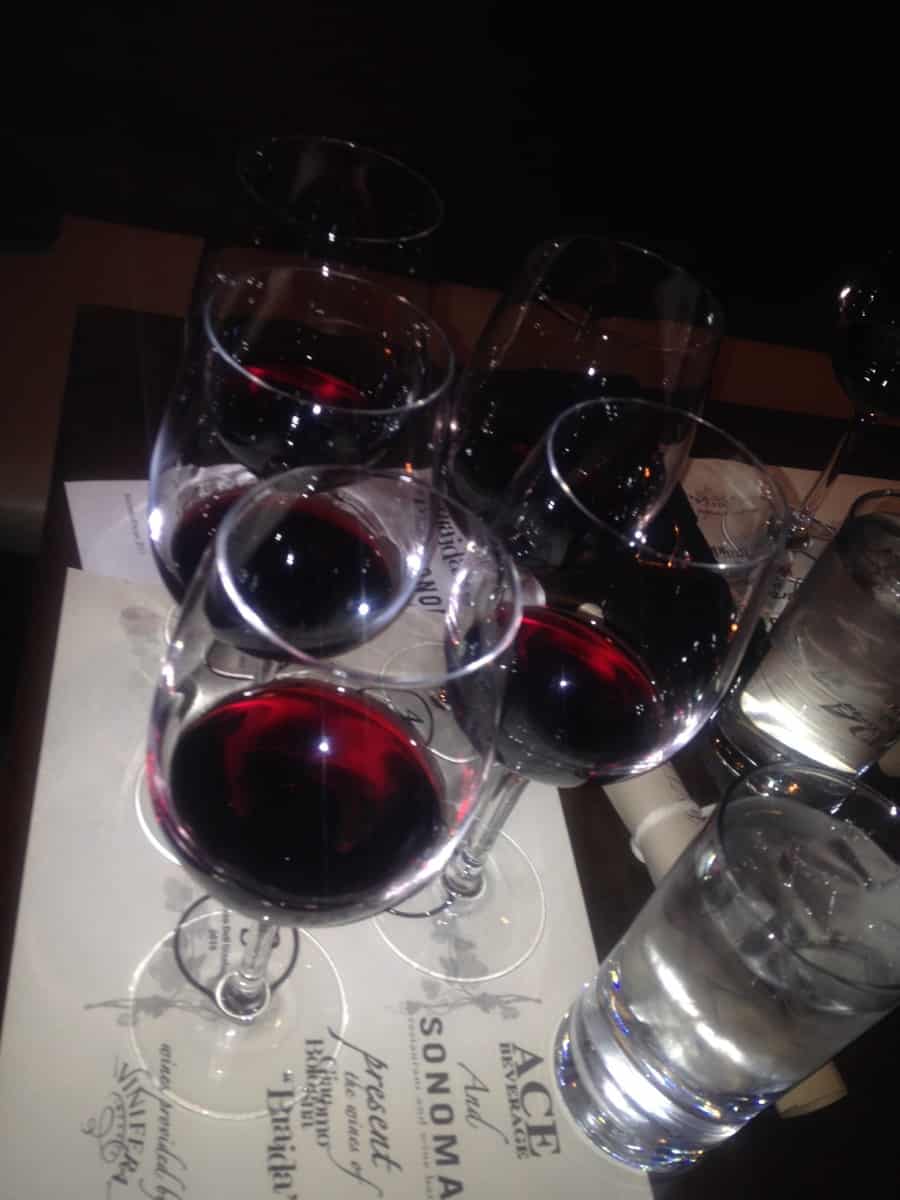
Pre-Dinner WineTasting
Monferrato Rosso Il Baciale 2011, $29.99
A blend of Barbera, Pinot Noir and I think Merlot – beautiful cherry fruit with a touch of pepper from the Pinot and some backbone from the Merlot
Barbera Bricco dell’Uccelone 2009, $84.99
Barbera Bricco dell’Uccelone 2010, $86.99
These two wines were both 100% Barbera but very different. The 2009 had amazing fruit-forward cherry and even a bit of baked apple fruit intensity, and oak was in the background but beautiful licorice/anise on the finish. The 2010 was tight and needs at least a few more years for the cherry fruit to break through the strong structure of French Oak tannins and red skin tannins as well which made this quite licorice on the finish and also a bit closed on the nose – this one will be much better 5 and even 10 years from now!
Barbera Ai Suma 2007, $121.99
Barbera Ai Suma 2009, $112.99
Again, these two wines were picked from the same vineyards, but from different vintages. From the intense aromatics to the first sip, the 2007 was just amazing on the palate with tons of cherry fruit, but also an added dimension – not just great acidity which Barbera is distinctly known for even in these hotter/riper vintages – but this wine had character and almost a brooding development of complexity. The tannins were there, but beautifully incorporated with fruit, oak and lush chewiness on my palate – I felt this wine luxuriously on my palate. The 2009 was also very good, but distintly had more chocolate, baked cherry pie and sweetness that surprised me a bit because it was younger. Make a note: these wines are both around 16% alcohol, so they are trophy wines that can stand-up competitively to top Bordeaux and Napa, but with so much more acidity to keep them refreshing!
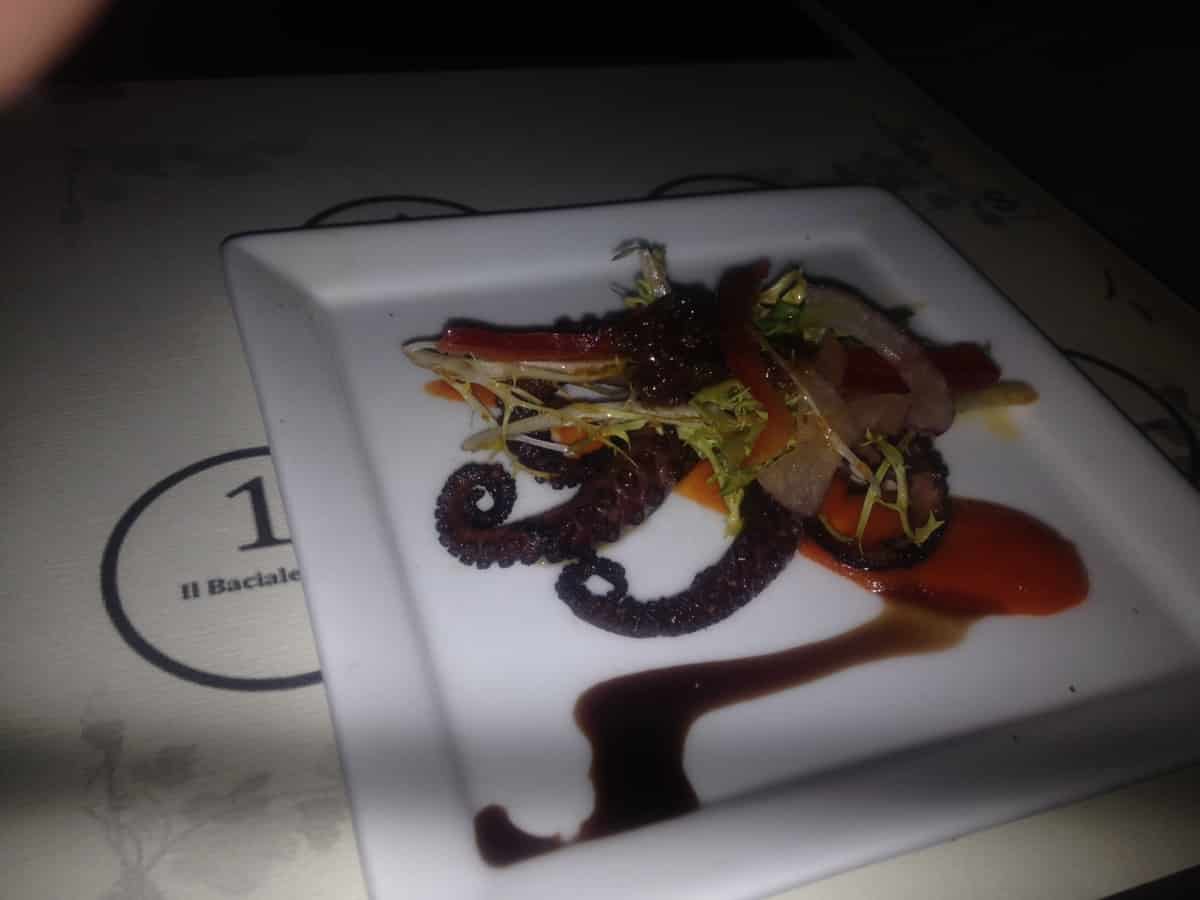
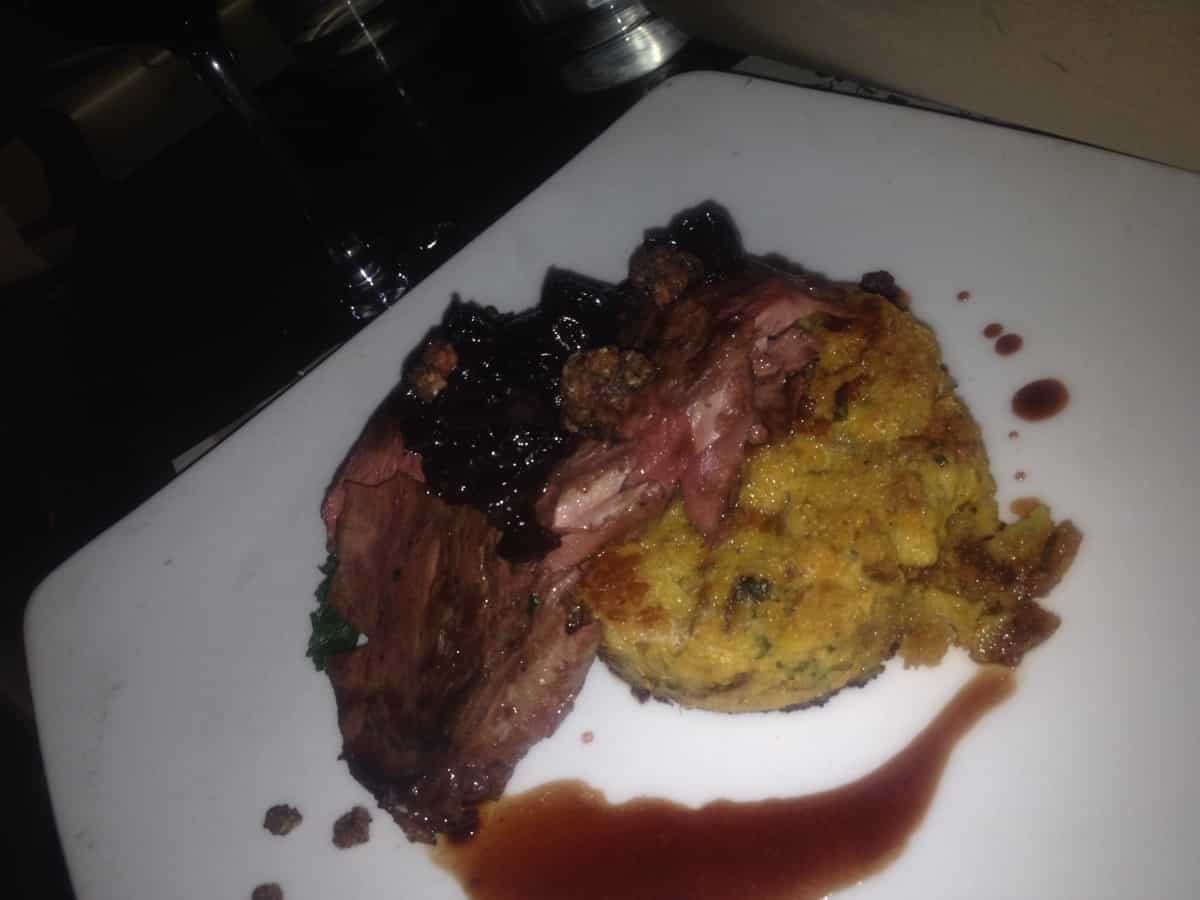
Three Course Wine Dinner Menu
First Fluke Crudo with preserved lemon, moscatto gelee, frisee and local asian pear paired with 2012 Moscato d’Asti
Second Grilled Duck Breast “Autunno” Duck, chicharonnes, Barbera cherry gastrique with savory pumpkin and sage bread pudding paired with 2011 Barbera Monte Bruna
Third Plum crisp with Local plums, brown sugar farro crumble and local goat cheese gelato paired with 2012 Brachetto d’Acqui
Little known fact: the grape varietal “Barbera” was once a throw-away jug wine kind of grape that was never taken very seriously in the Piedmont Region of Italy where Barolo and Barbaresco are the King and Queen of wines respectively. Guiseppe Bologna, the founder of Braida winery, was the first back in the 1980’s to produce prodigious wines by planting Barbera vines on his family’s land and using new French oak as his aging barriques.
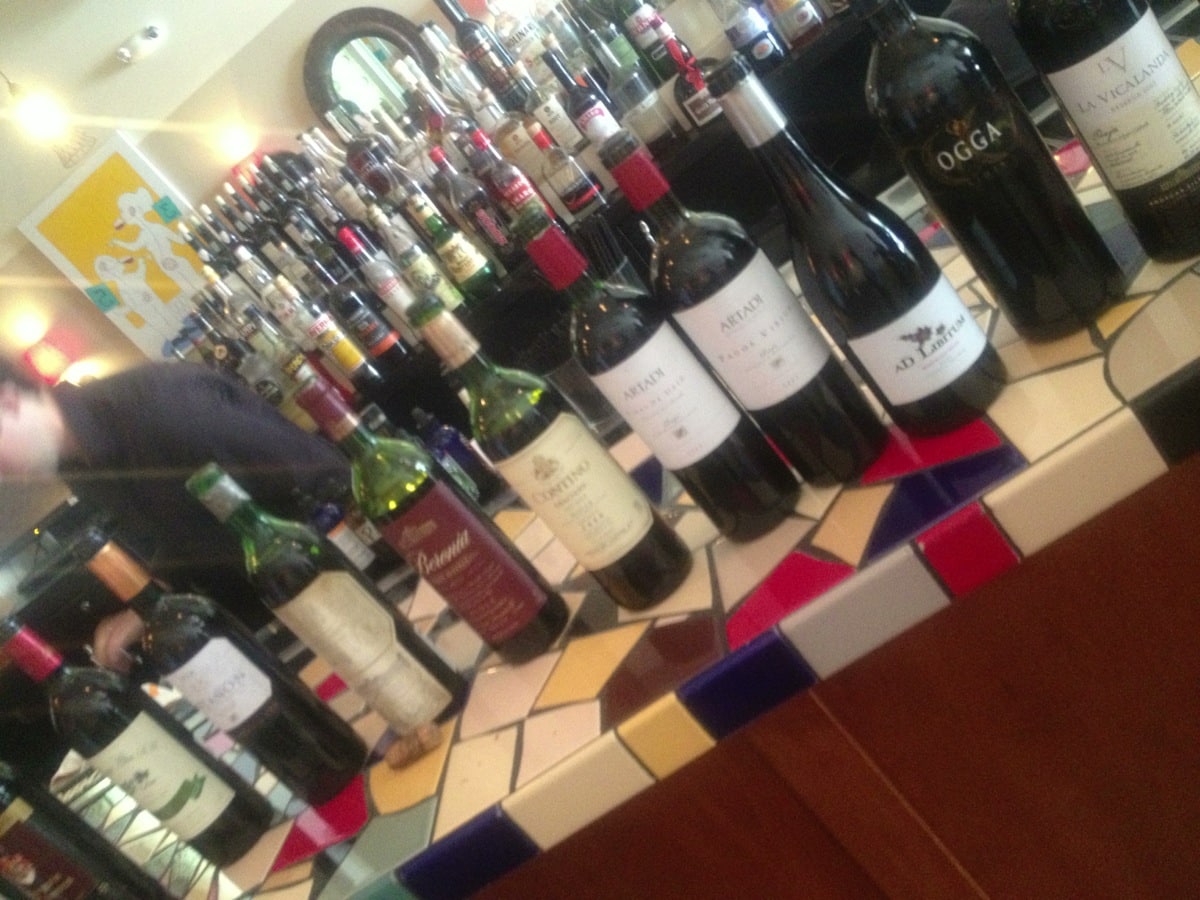
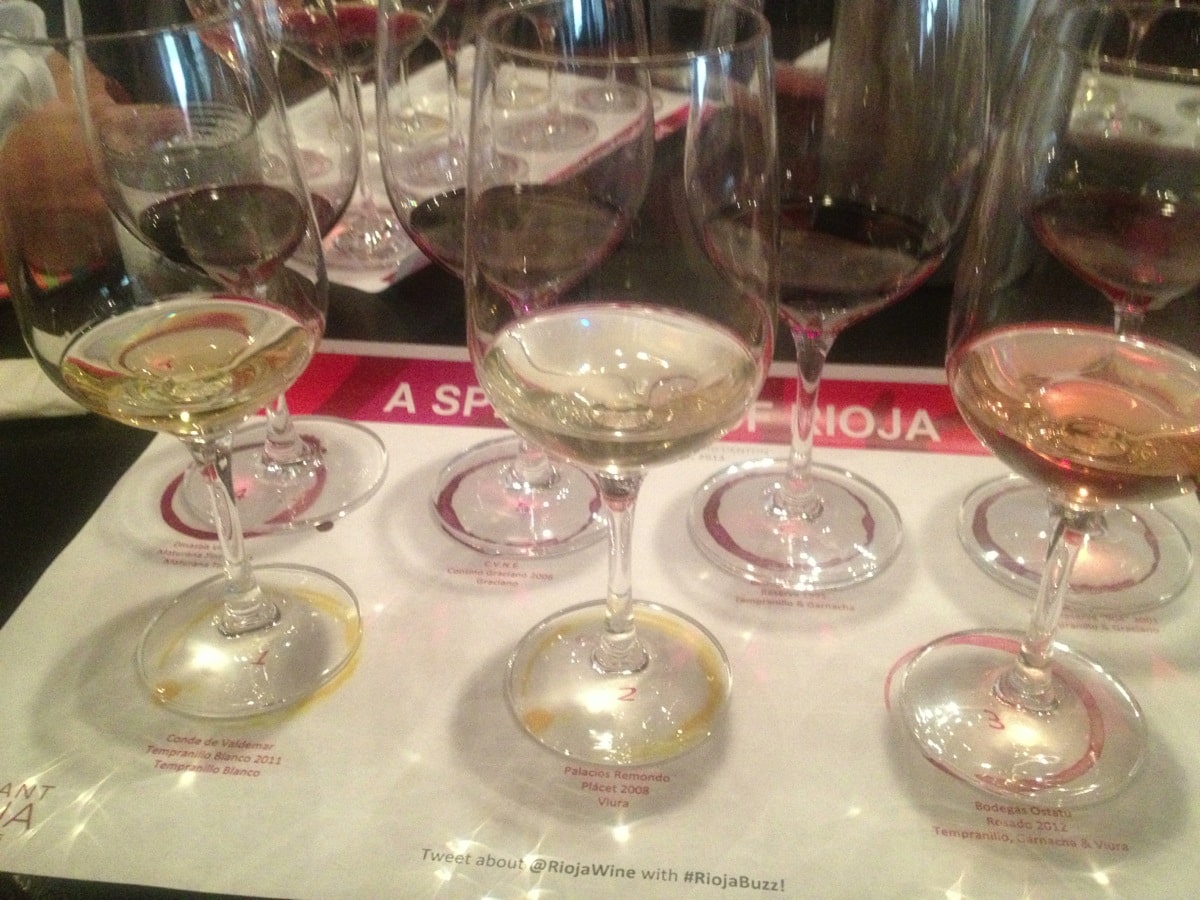
Wednesday, June 12th, 2013 I attended a fun wine tasting for the Trade put on by Vibrant Rioja who were showcasing the wine region at a tasting put on at Ripple Restaurant in Cleveland Park, Washington, D.C. Aaron Gordon was representing Vibrant Rioja and let’s just say – he’s a character! The wine trade always has attracted the artsy and the intellectual, and maybe the slightly off-center – I would say this guy fits the bill! The other speaker was a more traditional sommelier.. well almost David Denton who was also at one time a punk rock guitar player – but now he works as the sommelier at Charlie Palmer Steak on Capital Hill. But the presentation was very good – well, actually I couldn’t see the tv screen presentation (was it a slideshow?), but the layout of the wine tasting was really excellent and easy to follow – numbered glasses, white in front of red.
So what did I gain from this Rioja tasting?
-Tempranillo can be white – yes, I had probably my first white Tempranillo – and it was very good! I would say it was a medium-bodied white and I think it had some oak, but it was also unusual in that it was slightly oxidized even though it was a young wine – so it had those sherry-like features/burnt almond that made it seem much older. -there are many indigenous varietals I had never heard of and I tried one that made me pretty excited – Maturana Tinta – a gamey/blackberry fruit red grape that had quite a bit of life and a touch of gaminess! After tasting so many steady Cabernets and even Tempranillo’s in my wine tasting career, it’s always nice to find a red varietal that has life and potential – this wine (albeit this was a better-made more expensive version by Dinastia Vivanco (2009) shows how there is more great wine to explore even from well-known regions like Rioja.
-a red wine over 10 years old isn’t necessarily brickish in color or aged in taste – I’m still amazed at the vibrancy and purple color of the Bodegas Ontanon Reserva 1995 (Tempranillo and Garnacha) – my understanding is that this wine had been kept in the winemaker’s cellar until recently which may explain alot – the color suggested a relatively young wine and the fruit was still noticeable on the palate, although there was quite a bit of that aged cedar box you get from slightly older wines. I think more than anything, Tempranillo can age amazingly well, but proper treatment and storage of your wines can make a HUGE difference when you go to open something over a decade old – consider improving or maintaining quality wine storage!
Overall, the event was very nicely laid out and had a festive feel. I also like the fact that they chose a wine bar – Ripple – vs. a traditional fancy schmancy fine dining restaurant – it gave this a more festive air. Rioja is almost an exclamation point for Spanish wine – you can simply walk in to pretty much and decent restaurant and ask for a “Rioja” and the server will know that you mean a Tempranillo from the region. Tasting Graziano, Garnacha, Maturana and many other varietals opens up this traditional wine region to new experiences. Also, the traditional blending of Cabernet and Merlot with everything is a choice here – some traditionalists in Spain are trying to bring more local character to their wines by avoiding the overly oak, rich, modern style. One last point – traditionally, Rioja uses American oak barrels vs French for aging of wines – this also gives them a slight “coconut” aromatic that sets them apart from other European wines. Cheers to Rioja!
“In Order to Make Great Wine, the Vines Must Suffer..”
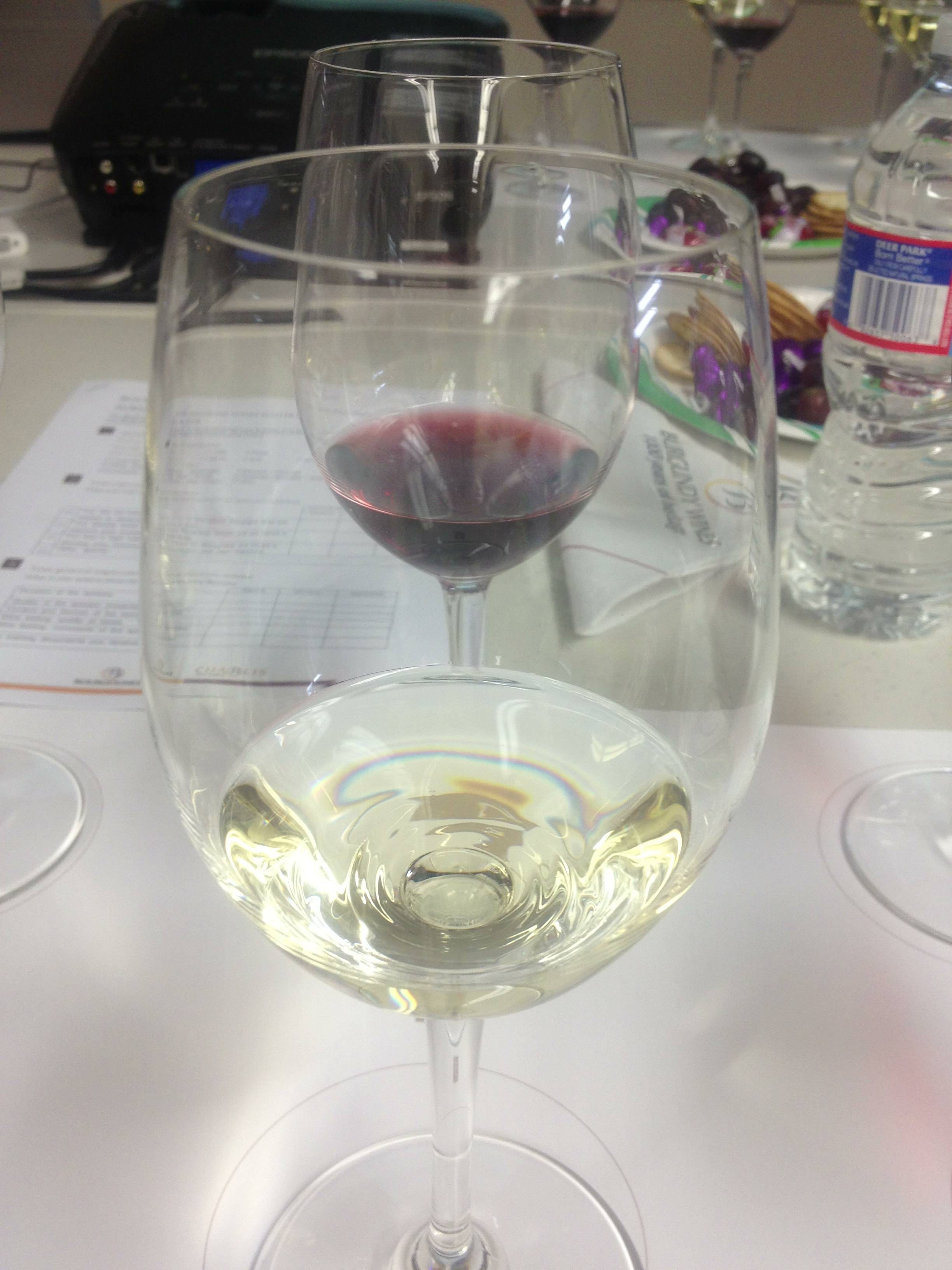
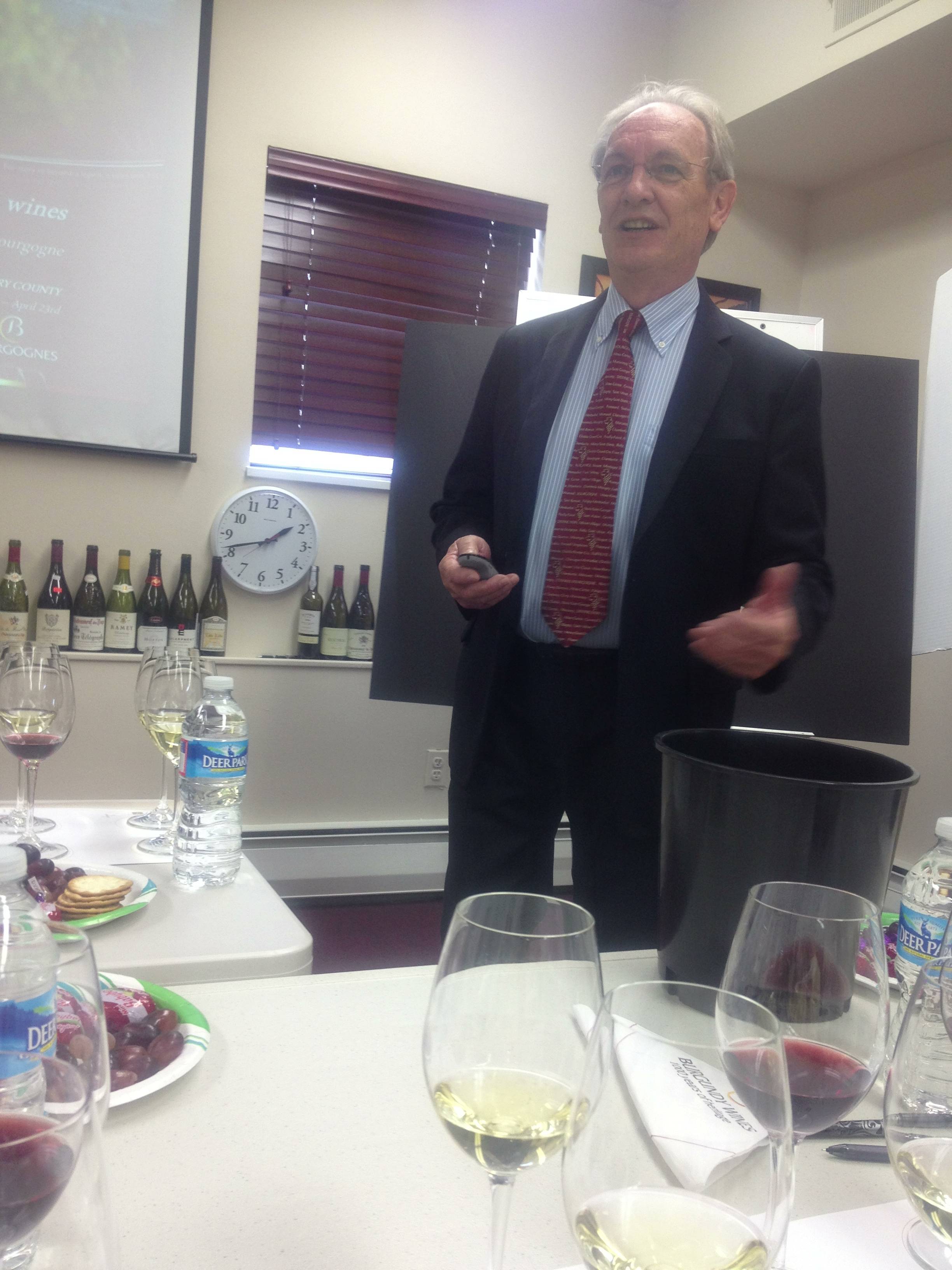
I attended a recent trade tasting given by the Bureau of Burgundy Wines on Tuesday, April 23rd at the Capital Wine School in Washington, D.C. – it was taught by a very affable and precise Jean-Pierre Renard who took us through history, philosophy and ultimately a tasting of 9 wines from the lowest classification up to a Grand Cru – Corton Grand Cru, les Renardes, 2008 Domaine Maillard.
We covered the basics of Burgundy which can actually be quite confusing. In a nutshell, Burgundy is a region and the wines are named from their location in that region. The basic breakdown is Regional wines, Village wines, Premiere Cru wines and Grands Cru wines, each respective layer being more rare and specific to a smaller number of wines and thus normally costing more as well. If you purchase a regular Bourgogne with little more information on the bottle, it most likely can come from grapes grown anywhere in that region. Village wines have regionality, but are not specific to any site while Premiere Cru and Grands Cru grapes come from specified parcels. Add to this the complexity rule-wise of “climats” which loosely translates according to the speaker as the “DNA of the individual Bourgogne Vineyards” – I actually found a site in English that delves deeper into the climats concept – the “climats”. Climats equates closely with “terroir”..
OK, now that you’re probably totally confused, let me say that much of what the speaker said rang true with what I had learned over the past 15 years at various wine classes and courses.
Burgundy has been producing serious wine since the Roman times, and afterwards the plots of land came from Church donations by nobles – they always gave their worst sites (poorest and rockiest soils) to the local Monasteries. Ironically, the rocky soils and hills they donated actually produce the world’s greatest wines!
The concept of “terroir” has really been developed from the wines of Burgundy more so than any other region – why?
1)They pretty much only use Pinot Noir for red wines and Chardonnay for white wines (a few exceptions like Aligote, but these are not blended)
2)hillside vineyards grow very different quality grapes from vineyards grown in the valley – hillier/higher sites produce more intense wine flavors, valley grapes are more generic.
3)Each vineyard site has it’s own weather patterns, geology, geography and even human/historical conditions. This last point is very confusing to most Americans: wine is made by humans, NOT by nature! Choosing the right site and propagating the best grapes is a human endeavor, but Nature is always adding chance to the equation. There is science as well as mysticism in the vineyard, maybe even some witchcraft..
“People can’t wait for aging wine any more, they want to drink everything young..”
A sad refrain by Jean-Pierre, but the reality of the modern wine drinker – people today don’t want to age their wines, so they want to drink young vintages before they’re ready to shine. There is so much history in Burgundy and even though winemaking today is better than ever, to truly understand and appreciate a fine age-worthy Burgundy, you simply must wait – Patience!
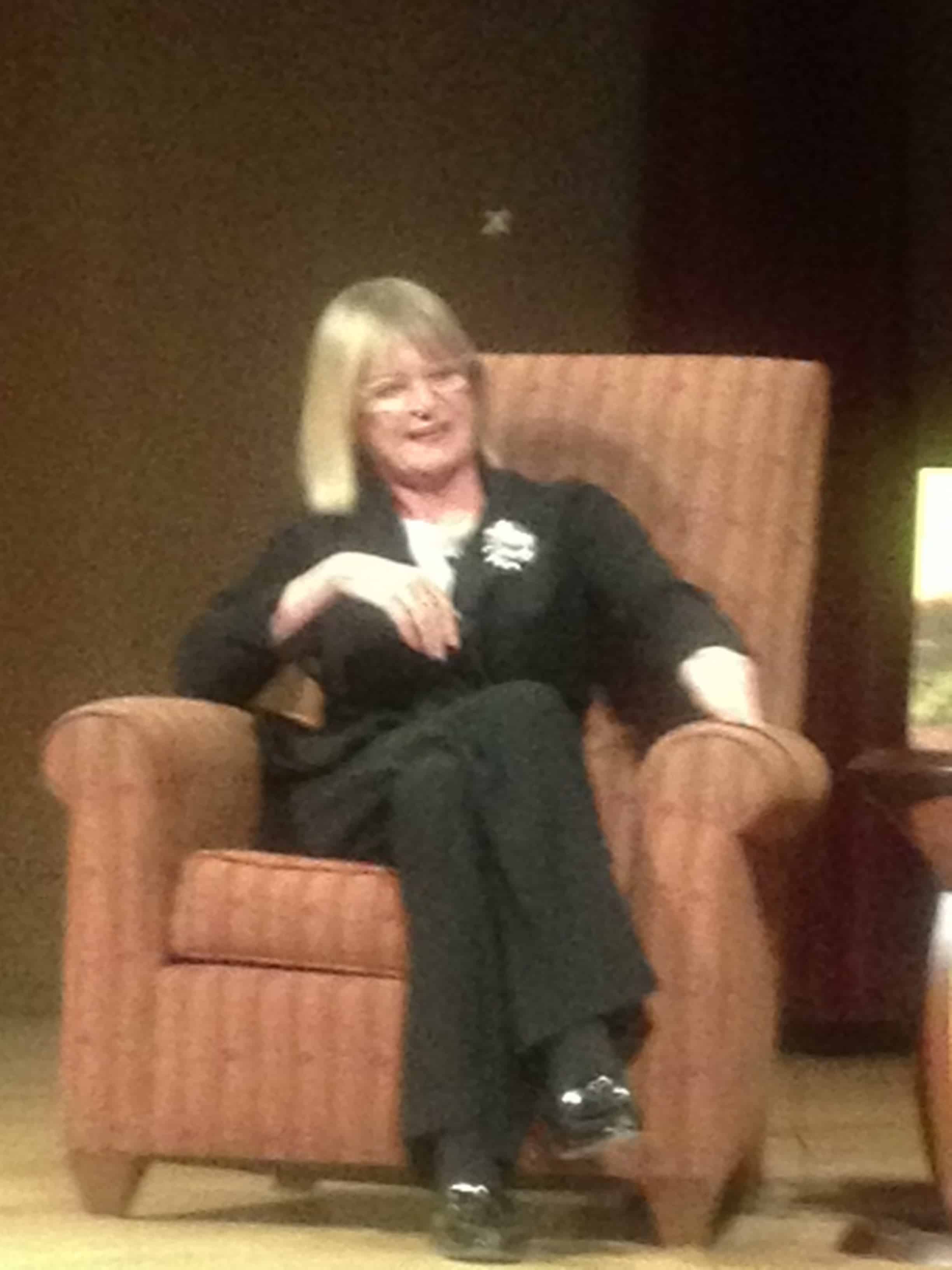
Dave McIntyre of both the Washington Post and his own Wine Line Blog interviewed and cajoled Jancis on a comfortable stage setting – the two seated in “comfy chairs” (OK – bad Monty Python reference! )
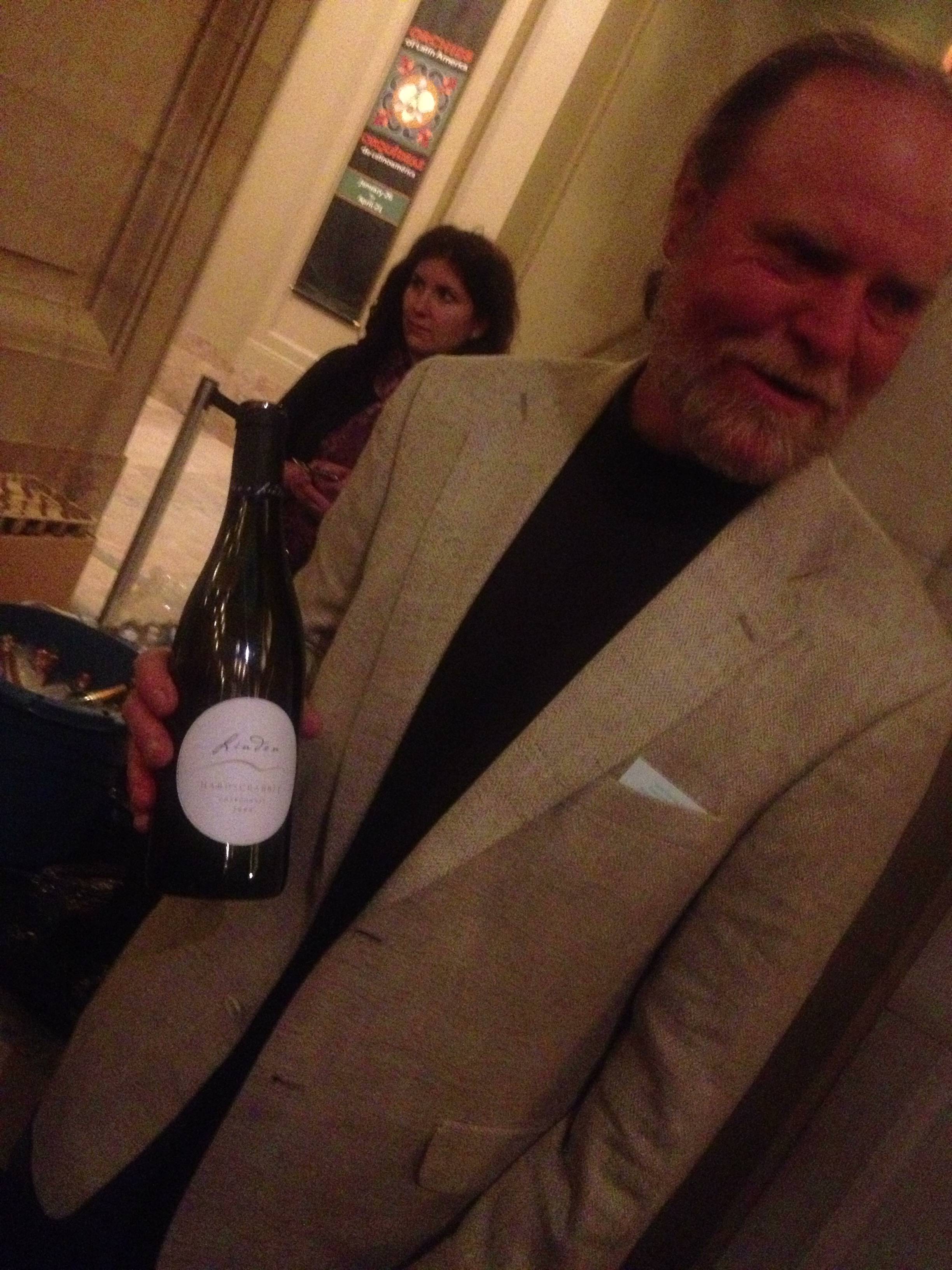
Jim Law, Linden Vineyards, Virginia
The discussion related to wine, specificially American, and Jancis’ latest book (with the fellow authorship of Linda Murphy) American Wine: The Ultimate Companion to the Wines and Wineries of the United StatesJancis has a very British speaking style and a dry wit that is best appreciated with a glass of wine. She mentioned that there are now 8,000 wineries in the US – the majority outside of California – and this is part of why America has become a great wine producing region on the international scene. I haven’t read the book, but she mentioned that it was primarily written by Linda Murphy who is a sports writer – and there is very little technical information about wine, the book was designed to be a fun read. I want to say – it is VERY difficult to make talking about wine interesting..Dave McIntyre did a very good job by broadening the topic from just American wine into lifestyle (mentions of wine tourism and also Dave’s own organization DrinkLocalWine ) as well as an interesting word association back-and-forth at the end:
Dave: “Natural Wines” ?
Jancis: “Very trendy right now..They have to be good!” (approximation of a quote!)
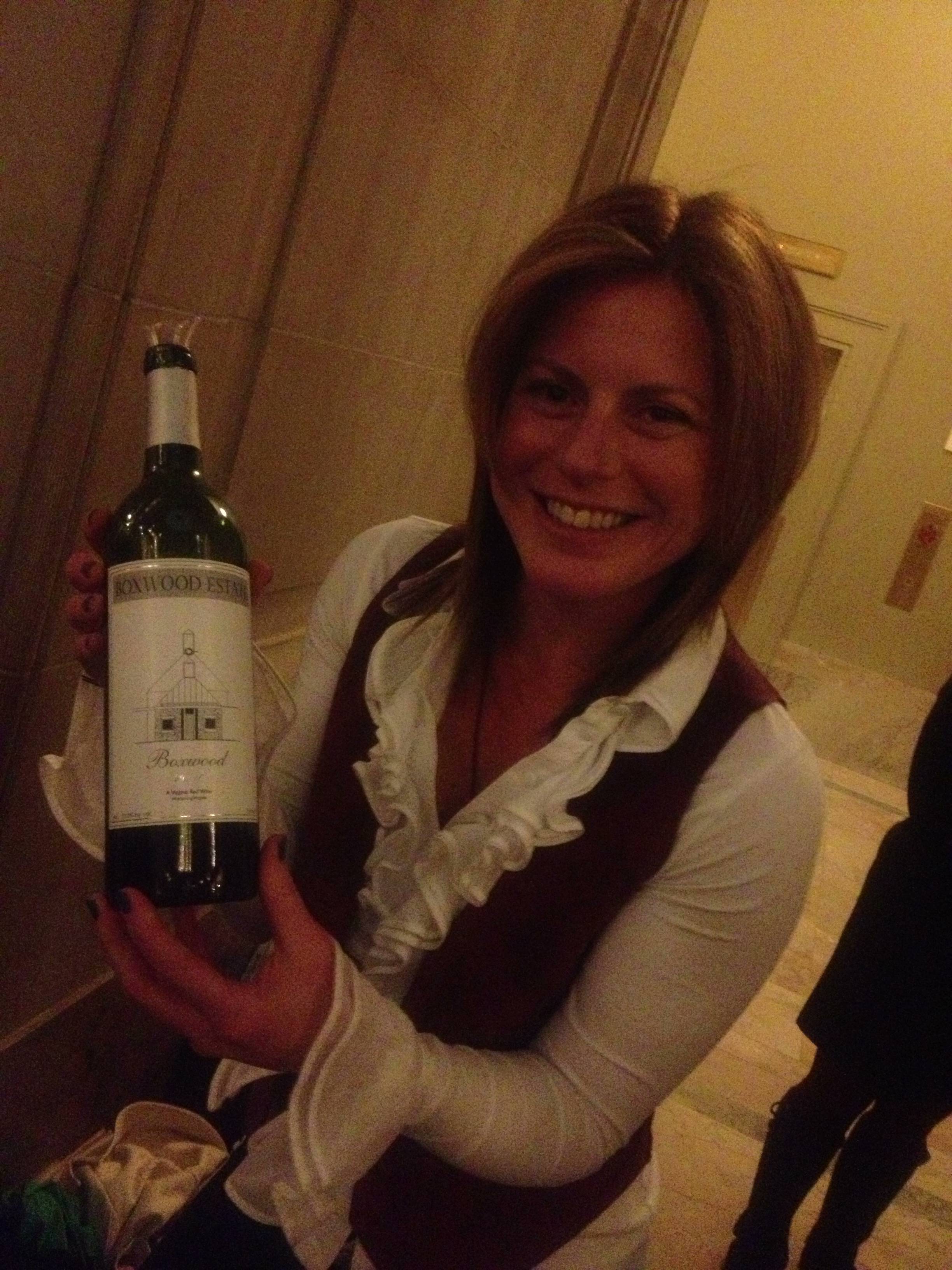
The Lovely Rachel Martin, Boxwood Estate Winery, VA
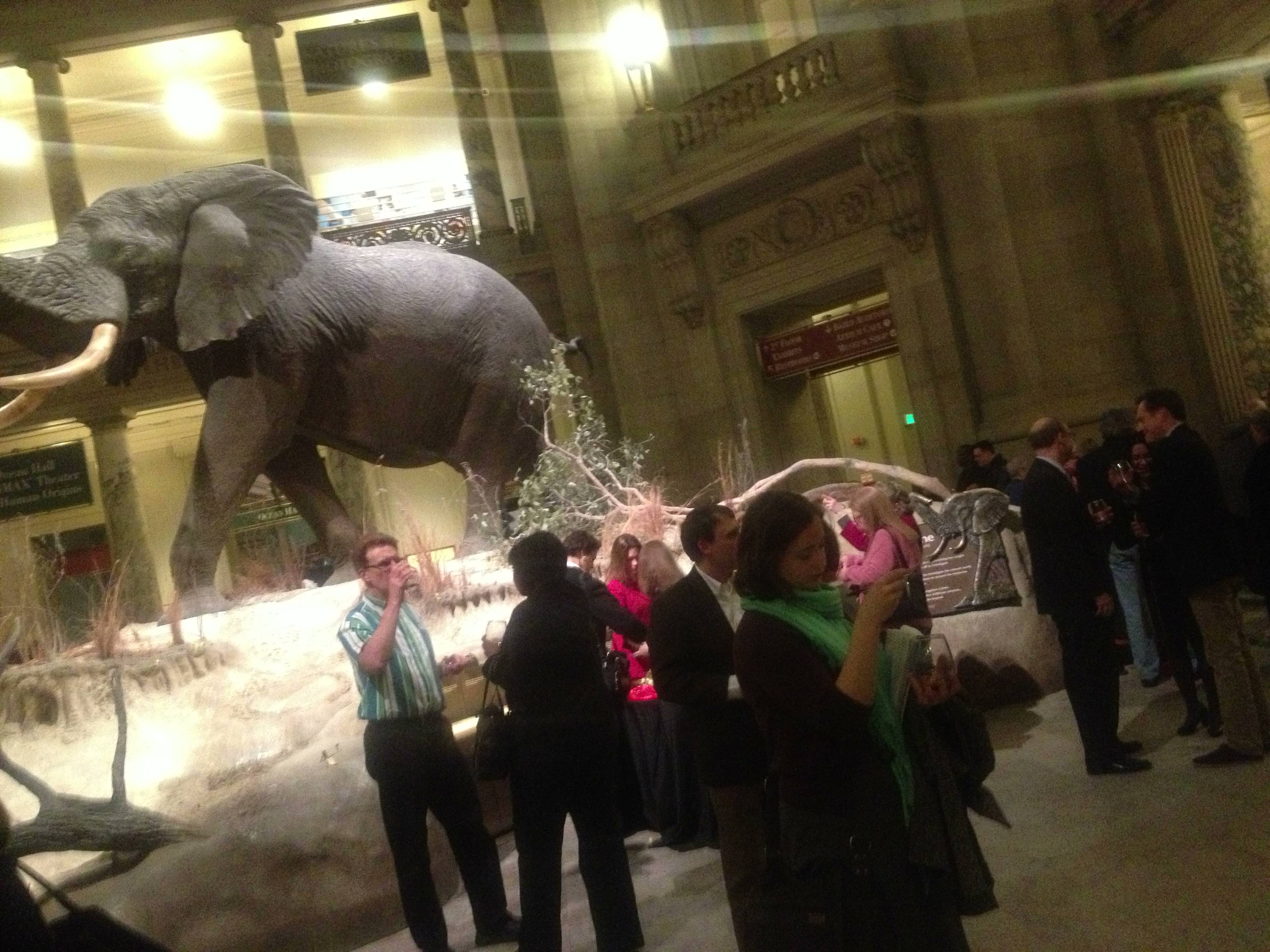
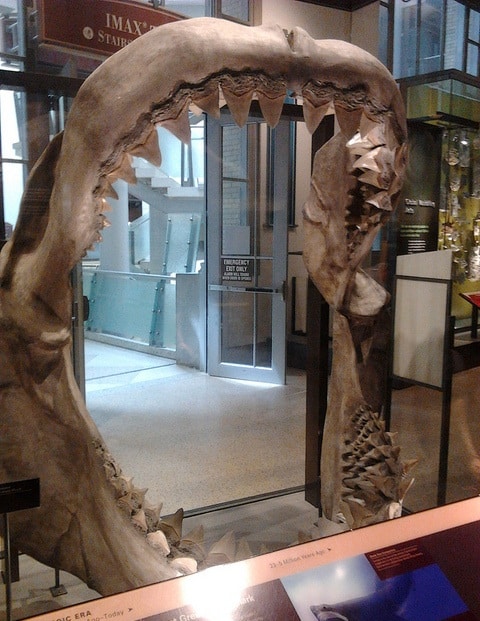
Overall, an excellent evening and the finish was a wine tasting in the famous Natural History Museum Auditorium with the elephant..nobody probably noticed, but the famous dinosaur Shark Jaws were hiding behind the wine exhibition..sort of like the evening – a subtle discussion of wine with amazingly delicious wines by American wineries from Idaho to Virginia – is America “biting back” at the French/Italian wine dominance of the past? Who knows – Cheers!
American Wines take a BITE out of Europe’s Dominance!
Everything is Bigger in Texas, but their wines are actually pretty subtle..
Charlie Adler, TasteDC and Andrew Stover, Vino 50 Selections
Andrew Stover of Vino 50 Selections presented some really great wines from his Texas portfolio at the TasteDC 6-Course Texas Wine Dinner at Mayfair & Pine on Saturday, March 2nd, 2013. Andrew is a well-known Sommelier and wine broker in the Washington, D.C. area who has a passion for American wines. My first question to Andrew prior to the event is how could Texas make great wines when the grapes have to suffer through such high heat and desert conditions. His reply was that hot dry weather is actually perfect for grapes – in fact, the dryness also prevents pests and allows the winemaker to actually make more natural/organic style wines. As far as we know, this was the first Texas wine dinner in the history of Washington, D.C. and thus an introduction of McPherson wines and Duchman Family wines to the dining public.
<Note: We have an Upcoming Anchor Beer Dinner on March 27th, 2013 at Mayfair and Pine>
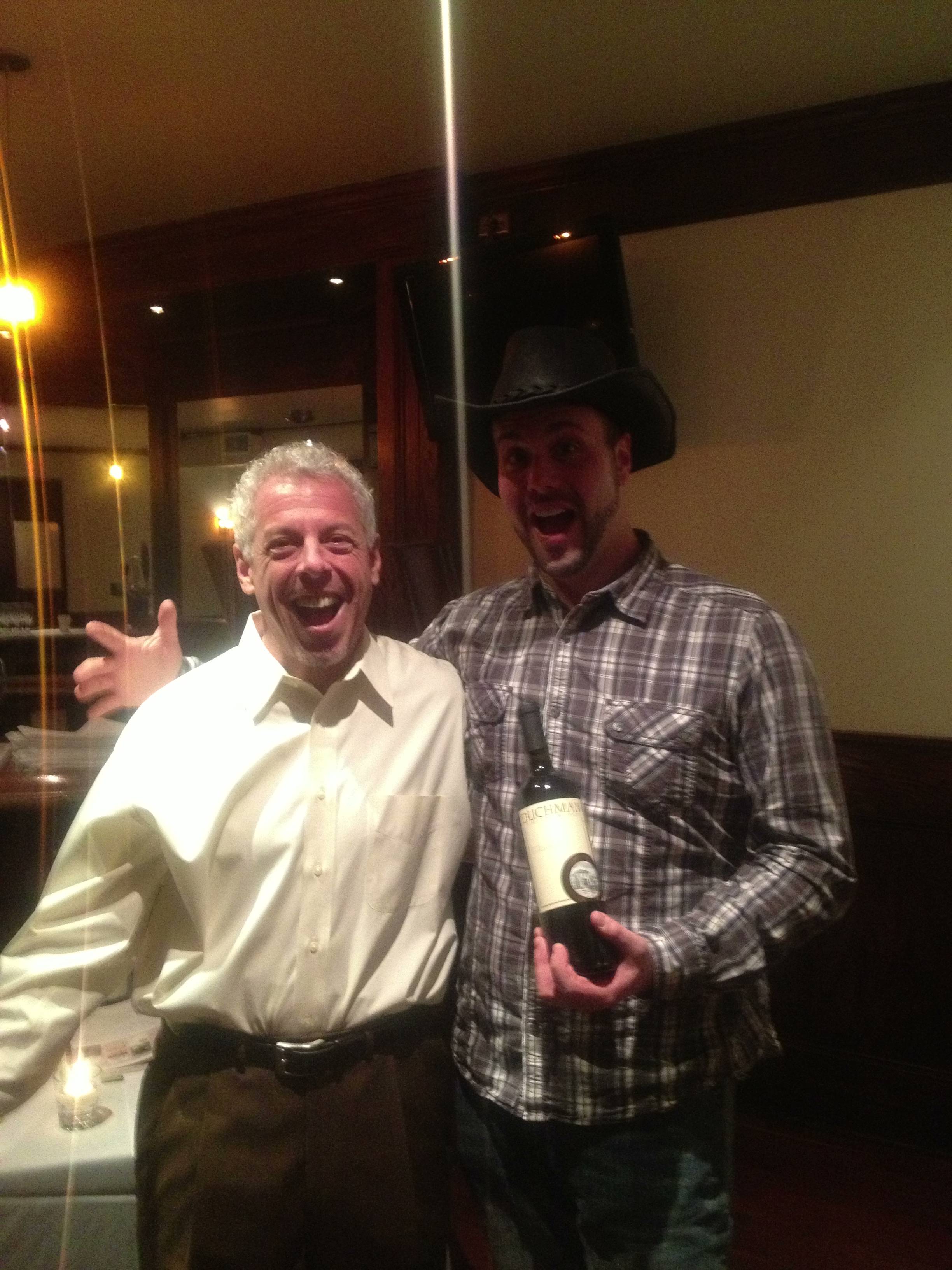
Andrew Stover – Yee Haaahh!
The Dinner was my second at Mayfair and Pine, the first being the Champagne Dinner I attended in December at the restaurant. Chef Emily Sprissler is a Top Chef alum from Season 2 and she knows how to handle the heat! This event was held on a Saturday night which had the restaurant bustling both upstairs and downstairs – a real challenge for the chef.
Here’s the menu, the dishes and some comments about the dishes and wine pairings – Enjoy!
Welcome Amusee Bouche – Pork & Beans!
1st Course
Welcome Amusee Bouche – This was a take on “Pork and Beans” with homemade bacon – it was quite delicious and had a nice smoky/earthy aroma and flavor to get the meal festivities going! The McPherson Sparkling Chenin Blanc/Muscat went well with a nice effervescence and a touch of the peachy Muscat fruit which created a tasty combination.
2nd Course
Herbed Johnny Cakes with Citrus Butter & Micro Green Salad
Duchman Family Vermentino
I really enjoyed this pairing – I’m not a big white wine fan, but the acidity of the wine cut through the citrus butter beautifully and actually made the dish much lighter to enjoy more food!
Herbed Johnny Cakes with Citrus Butter & Micro Green Salad
3rd Course
“Angels on Horseback” – Chesapeake Oysters wrapped in bacon sauteed in Plum Butter served on Flatbread
Anything wrapped in bacon is great, and these little oysters were nicely nestled in this crunchy chewy porky goodness. This wine was a classic Rhone varietal blend and the slight earthiness of the Mourvedre and Carignan is nicely balanced by the fruit and acidyt of the Viognier – this just goes to show you that America can produce French style wines that are just as good if not better than the originals – American wine ingenuity!
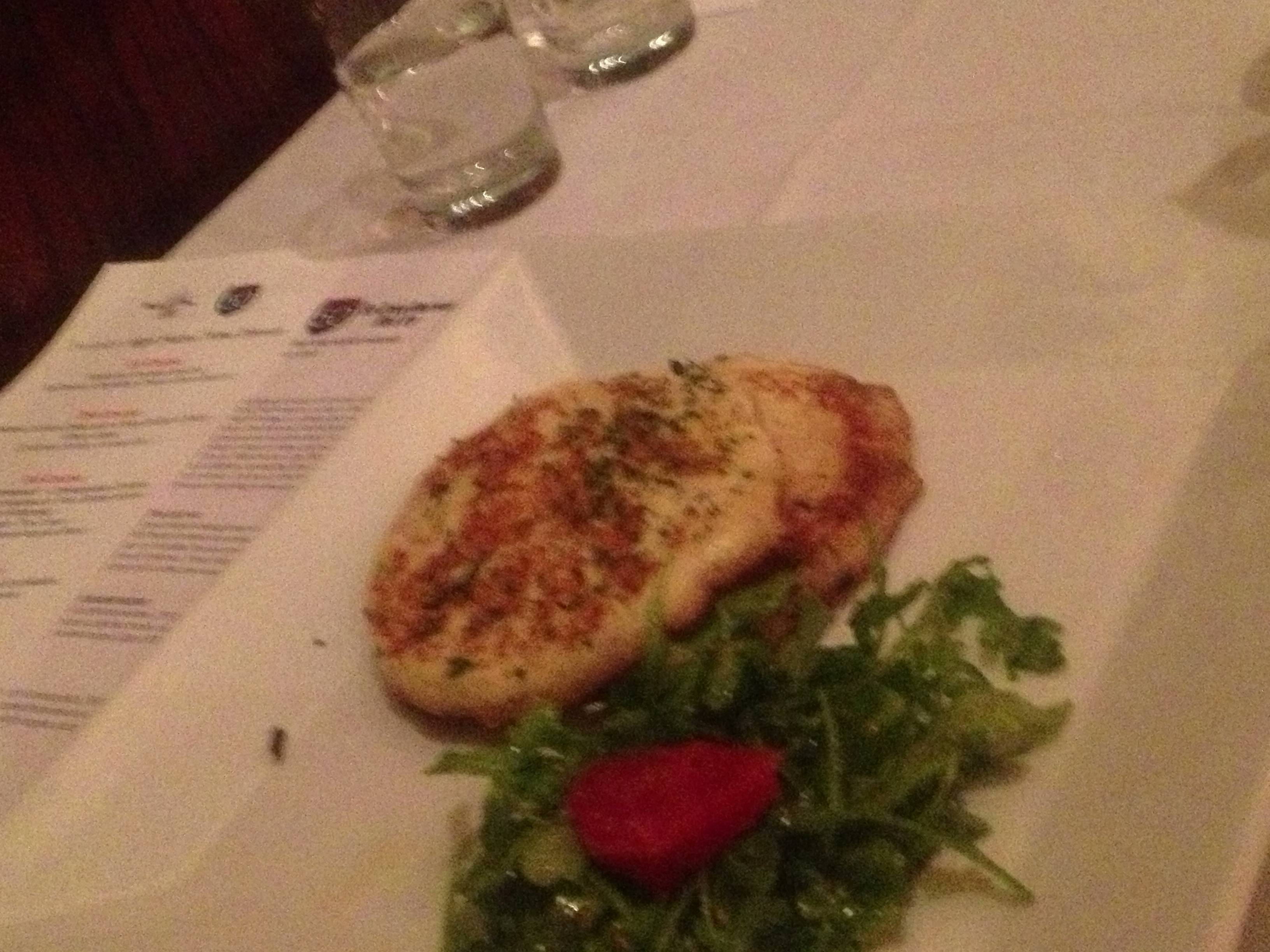
Halloumi Cheese & Radicchio Enchiladas
4th Course
Halloumi Cheese & Radicchio Enchiladas
Duchman Family Sangiovese
Sangiovese is the grape of Chianti and so many spaghetti Italian dinners and it was a pleasant match in this wineries rendition. The slight spicyness of the sauce (almost like an Italian marinara) was tastefully offset by the roundness of the wine and created a nice marriage. Another fallacy is that traditional Mexican foods don’t go with wine (Cerveza!), but this again proved that wine is a great bedfellow with Mexican and authentic American cuisine.
Wild Boar Swedish Meatballs
5th Course
Wild Boar Swedish Meatballs
McPherson ‘La Herencia’ Tempranillo
These were some spicy meatballs! The Tempranillo grape is grown in the dry hot regions of Spain, so this wine really shined..Probably my favorite wine of the night..well, except someone brought a 1o year old McPherson Syrah that was really Super!
Bacon Chocolate Pretzel S’mores
6th Course
Bacon Chocolate Pretzel S’mores
Coffee & Tea
It was overall a very nice meal and Texas wines will now be one of my Go-To staples – I’ve learned (over and over again!) that you should never assume with wine – just because you think a State is too hot, or cool, or whatever to produce wine, well then they’ll start producing wine, and you’ll be surprised. According to Andrew, Texas is the 6th largest producer of wine in the U.S. What other states are producing wine in the 7th to 50th positions? Who knows!?
Because one can never have enough wine, I had a glass of Chandon in the Lounge before the event. There was an interesting assortment of characters in the lounge including a gentleman who used to frequent the restaurant when it was The Jockey Club and two conservative women arguing about Obama. My bartender had lived in DC since the 1980s and used to live on 17th street.
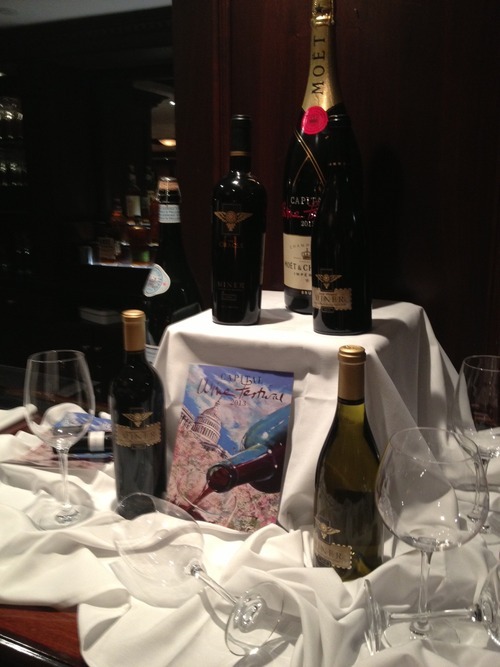
After I finished my glass, I checked in to the wine dinner. I found out I was seated at table 40 – with the winemaker. That’s how important I am (or that I like to think that). The restaurant has been renovated, but still maintains the old school/old DC decor. There was a lovely display set near a bar area of the wines featured for the evening.
Reception
2011 Miner Simpson Vineyard Viognier
For the reception the viognier was poured. It really is the perfect aperitif. It was incredibly aromatic with the honey suckle notes strongest on the finish.
Gary spoke briefly about the 2011 Miner Simpson Vineyard Viognier and presented the 2010 Miner, Napa Valley Chardonnay and 2008 Miner Wild Yeast, Napa Valley Chardonnay.
He provided background and history as to the winery, the use of solar panels at Miner and the incredible amount of varietals planted.
I was surprised at how Gary was down to Earth and incredibly pleasant. Besides speaking to the group at large, he frequently walked around to speak individually to the attendees.
First Course
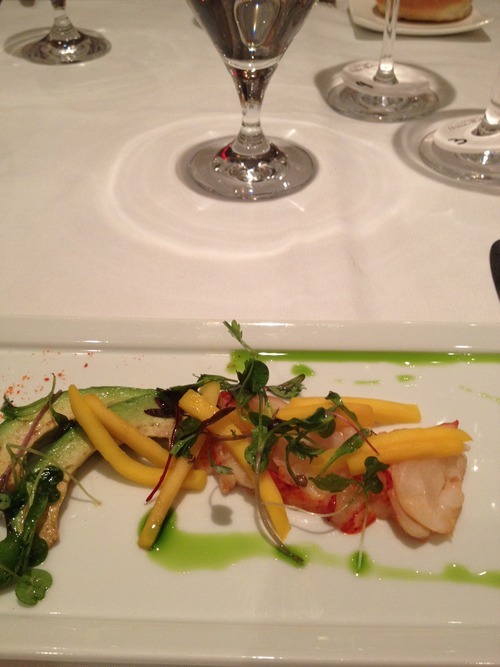
Lobster Carpaccio
Mango and Avocado Salad, Coriander Cilantro Oil
The first course was paired with 2010 Chardonnay and 2008 Wild Yeast Chardonnay. The plating on this and all dishes was spectacular. The buttery notes in both wines went incredibly well with the lobster and avocado notes. There was a creaminess that as a person who normally hates avocado (yes I hate it and no, don’t try to change my mind) was incredibly harmonious.
I was excited to speak with Gary about these wines especially the wild yeast. Apparently, he likes using wild yeast and giving up that control.
He was quite entertaining explaining how wild yeast can start the fermentation and give up or burn out quickly. I imagined little yeasts partying too hard and then dying off as they made this amazing chardonnay.
The 2010 chardonnay did not spend any time in oak, but did go through some malolactic fermentation. The wild yeast had spicer notes on the finish and was more viscous.
2010 Garys’ Vineyard Pinot Noir, Santa Lucia Highlands
Garys’ Vineyard is a 50 acre vineyard that was planted in 1995 by friends and growers Gary Franscioni and Gary Pisoni.
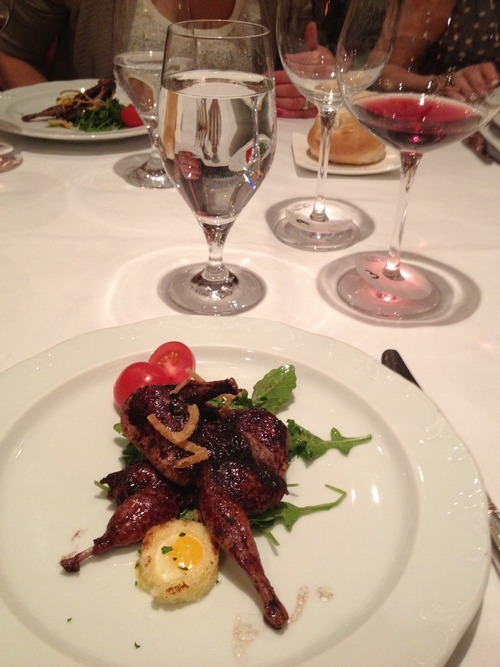
I love anything that incorporates an egg especially quail egg. The quail was perfectly cooked and seasoned. The pinot noir and quail worked well together bringing out additional flavors.
Gary and I discussed the concept of masculine and feminine pinot noirs. I used to have a boss who hated that description. Gary felt that this pinot was more masculine due to the body.
It was somewhat bright with big cherry notes on the nose with some plum on the finish.
Third Course
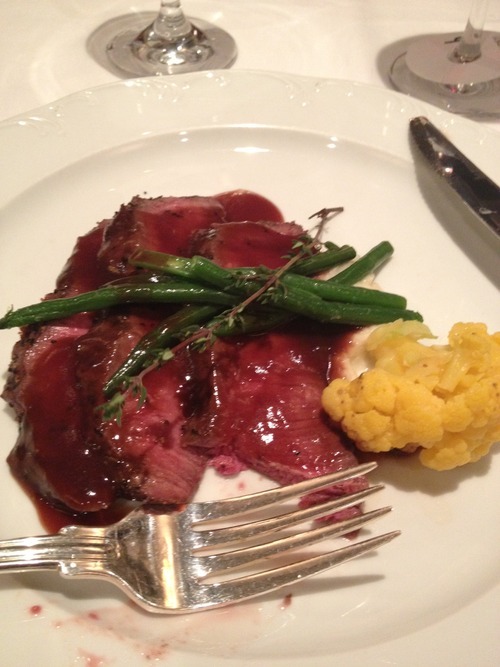
Pepper Crusted Virginia Bison
Wine Sauce, Horseradish Cauliflower Puree, French Beans
2009 Stagecoach Vineyard Cabernet Sauvignon
As you can see, I really wanted to try this amazing dish and forgot to take a photo before diving in (d’oh).
The 2009 Stagecoach Vineyard Cabernet Sauvignon is almost entirely made of cabernet sauvignon with about 5% cabernet franc and 5% merlot blended in. It was aged for 21 months in 60% new French oak. Definitely exhibits some of that almost toasty, vanilla notes on the nose.
The wine was silky with a lushness that went well with the pepper crusted Virginia bison. This was my favorite wine of the evening.
Fourth Course
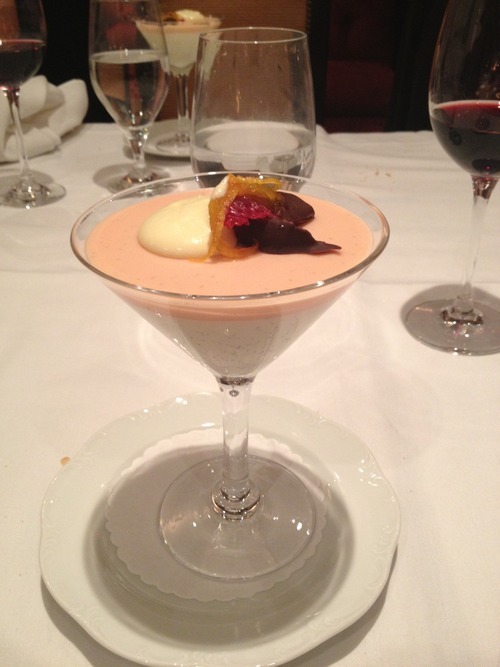
Buttermilk Panna Cotta
Fresh Berries, Blood Orange Sabayon
2008 “the Oracle” Meritage Blend
The Oracle is a Meritage Blend utilizing Bordeaux style grapes (cabernet franc, cabernet sauvignon, malbec,merlot and petit verdot). It spends 21 months in 55% French oak. It was incredibly balanced and full bodied. There were hints of cassis and blackberries.
I was surprised (like others) that this wine was paired with the dessert. But, it totally worked! I think worked best with the top layer of the dessert – blood orange sabayon.
The Chef, Chef Ferrier, and some of his staff thanked us at the end of the night. They also answered questions regarding Virginia bison. I think some people were becoming more difficult and drunk as the night wore on.
In the end, this was an amazing experience with spectacular food, wine and service. I would highly recommend attending a future wine dinner at the Capital Wine Festival.
Editor’s Note: here are some upcoming Wine Dinners in the DC Area on TasteDC:
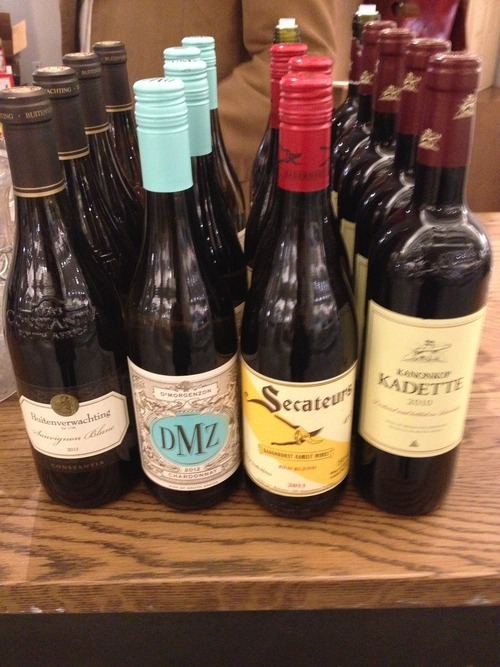
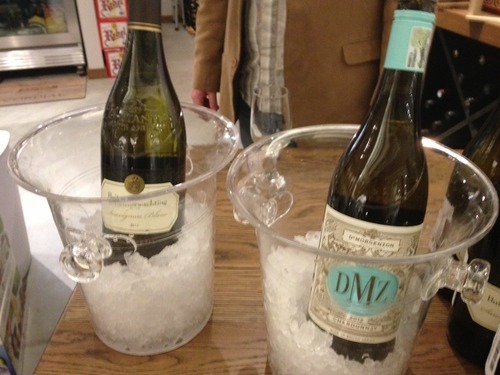
Buitenverwachting Sauvignon Blanc Constantia WO 2011 ($15.29 special bottle price)
De Morgenzon Chardonnay DMZ Stellenbosch WO 2012 ($16.19 special bottle price)
A.A. Badenhorst Secateurs Red Blend Swartland Coastal Region 2011
($14.39 special bottle price)
Kanonkop Kadette Red Blend Stellenbosch WO South Africa 2010
($14.39 special bottle price)
The wines we tasted were offered for 10% off. My favorite was the
Buitenverwachting Sauvignon Blanc Constantia WO 2011. It had wonderful acidity, light citrus notes and spice on the finish. The De Morgenzon Chardonnay DMZ Stellenbosch WO 2012 was also incredibly well done. It had creamy notes without being overly buttery or vanilla. There was some nice fruit midpalate.
Girl Meets Glass really enjoyed the reds especially the A.A. Badenhorst Secateurs Red Blend Swartland Coastal Region 2011. It was reminiscent of a GSM blend. The Kanonkop Kadette Red Blend Stellenbosch WO South Africa 2010 is one of the most well known and extremely well done wines from South Africa. It’s a bigger red with tobacco notes with a smooth finish.
We were lucky enough to have Eric Rohleder, Founder and Owner, Cordial Fine Wine & Spirits, leading our tasting. He is incredibly knowledgeable and helpful, but extremely down to Earth. I can’t wait to go back to the shop as the selection is well-curated and still affordable. They also had Hop Slam!!
After the wine, I continued the fun to Penn Social for my game show league. We played Pyramid and I was robbed. I did very well at Groundhog Day category. I ended up giving clues to my teammate for synonyms for friends and we didn’t get one. Sigh. Therefore, I stole a competitor’s beer. Next week, he’s going down.
I attended a LivingSocial sponsored event “Wine + Cheese at Black’s Bar & Kitchen” (Bethesda, MD) on Saturday, November 17th, 2012 from 1 – 3 pm – actually, it was the first event I had attended through LivingSocial even though I had purchased many restaurant deals from them in the past. The event had 2 flights of cheeses, 12 cheeses in total and wines were paired with them, a total of 8 (See list of wines and cheeses with Photos below). It was a seated event and guided tasting with main presenter Chef Mallory Buford speaking about the cheeses and Black’s Sommelier Anderson Plunket discussing the wines. Chef Buford was very knowledgeable about cheese, but each cheese producer also had their own representative/distributor to talk about each cheese’s qualities. It was a nice combination of class and chance for people to talk amongst themselves – I would call it “lecture light” and more of a chance for people to try everything and make their own conclusions. This restaurant is really known for seafood so it’s kind of interesting that they decided to try a cheese and wine event – my understanding is that all of these cheeses are on their existing menu, so that makes sense..but don’t ask an Italian – they claim that seafood and cheese should never go together!
So these 2 young ladies taught me a new term “Drink Until Your Sober” – I sort of understood what they meant, but they elaborated that this is when you keep drinking, especially wine, and you no longer feel drunk/act drunk..not sure if this is true, but it’s an interesting perspective none the less – Cheers!
OK, it’s just a bunch of photos from past TasteDC events, but it kind of shows you where TasteDC comes from – it’s my imagination of how people really would like to eat and drink..a bit of a dream world, but food is so much more than nourishment..Just Enjoy!
Charlie Adler, Managing Editor
TasteDC Food and Drink Event Calendar
“Educate Your Palate”
I spent over 15 years organizing and attending wine dinners at TasteDC – it is definitely my favorite part of being in a unique business! Weird as it may seem, a “wine dinner” is conceptually as confusing as a wine tasting to most people – it’s a very foreign concept to many Americans – literally! A wine dinner is in essence a multi-course dinner served with several different wines – this is the simple explanation. A GOOD/GREAT wine dinner is when the various elements come together in a wonderful symphony of an event: wine, food, timing, pairing, educational component (this usually means a speaker), and impeccable service. It sounds very snooty, but that’s primarily because it’s based on the fine dining traditions of the Old World – particularly France and Italy. So what IS a wine dinner?
“A Wine Dinner Is a Meal Divided by Courses”
Most wine dinners include a menu of dishes served in three or more courses. For example, when you go out to eat at a fine dining restaurant, the menu is often broken down into Appetizers, Main Dishes, and Desserts. A Wine Dinner is a smart way for a restaurant to showcase both great wine and delicious dishes that showcase their chef’s talents. And yes, there is a formula: according to the traditional European format for a dinner (actually, any serious meal!) is begin with the lightest dishes, move on to richer dishes and finish with dessert – and yes, often there is a cheese course before dessert. A very simple multi-course dinner (with or without wine, but in the European tradition, food is pretty much always served with wine) would begin with some hors d’oeuvres, a seafood or pasta dish, a light meat dish (chicken or pork), a rich meat dish (beef or lamb) and dessert. Each course would be served with a different wine in a wine dinner and possibly even more than one wine per course. This would be called a 4-course dinner because hors d’oeuvres are usually not considered a dish, so don’t count in the number.
“Each Dish Should Be Paired with the Appropriate Wines”
I’ve been to wine dinners where there is only one wine paired with each dish, and that can be very satisfying! But I’ve also been to wine dinners where there are two, three, even four wines paired per dish (that’s a single dish!) and those can be very fun – albeit confusing at times. I want to touch upon the concept of pairing: pairing wine and food means there’s a synergy of flavor that is 1 + 1 is GREATER than 2. There are some classic examples of pairings: Sauvignon Blanc and goat cheese, Pinot Noir and salmon, and Cabernet Sauvignon and steak, etc. that work but I’ve had pairings that stretch the limits. The original old school formula for pairings was “white wine with fish and red wine with meat” but this is extremely outdated – creative chefs today don’t serve simply prepared dishes that are formulaic, they often prefer to add unique flavors and cooking techniques to their dishes that can be difficult to pair. To keep it simple (I wrote a whole chapter on pairing in “I Drink on the Job” entitled “A Meal Without Wine is Breakfast”). Just like with food, most wine dinners begin with lighter-style wines (like Sauvignon Blanc and Riesling) and move to heavier-bodied wines later in the meal – this makes sense – you wouldn’t want a Big Cab with your shrimp dish/course at the beginning of the meal, that would be way too heavy early in the meal (and a poor pairing!). Also, later in the meal, your palate needs richer and bolder flavors or you won’t notice a dish, so big wines and red meat (or dishes that are braised/slow cooked to increase the rich flavors of a meal) make sense.
A quick note on pairing/wine dinners – most have a theme like “Italian Wines” or “California Boutique Wines” that create the expectation of a special celebration of a wine region or theme. This is important because a wine dinner is a “showcase” event – a chance for a wine maker to show his/her best efforts in the vineyard or a display of a chef’s talents to create gourmet offerings. The point is that usually either the wine or the food is the main center of the wine dinner, one almost always overshadows the other. For example, I attended a wine dinner a few years ago with MacArthur/Addy Bassin’s Liquor where there were over 20 boutique California wines served – yes, the food was excellent at the Mandarin Oriental in Washington, D.C. (I think it was 7-Courses, but I forget!), but every wine was introduced before each course by either the wine maker or a representative who intimately knew the wines – educational and exhilarating!
“A Speaker Needs to Introduce the Wines at the Wine Dinner”
Not particularly profound, but someone needs to talk about the wines at a wine dinner and the more knowledgeable, the better. Normally, the wine maker or a representative from the wine community talks about the wines with each dish. Some speaker’s introduce the wines before each course, but this can be detrimental: it can add too much time to a dinner and it can get tedious for attendees! Most people don’t want to sit for more than three hours or so at a wine dinner (including breaks – hey, with all that wine, you may need to visit the bathroom!) so the length of an event is important. I always suggest that the wine professional speaker introduce their wines at the event, maybe speak once in the middle of the meal and then at the end of the meal. Most people at these events would rather talk privately to the speaker, so walking around and “schmoozing” with dinner attendees is a smart move.
Things I haven’t covered in this wine dinner discussion include the importance of speedy service, event duration, popular themes for wine dinners, and the myriad of service issues with this type of event. Staffing is VERY important – experience really makes a difference. One of the most impressive wine dinners I ever went to with the wines of Chateau Pontet-Canet at the Willard Hotel in Washington, D.C. was because of one factor: the Sommelier Caterina Abbruzzetti decanted every one!
Of course, there aren’t only wine dinners: In 14 years at TasteDC, I’ve attended craft beer dinners, whiskey dinners, Tequila Dinners, Cocktail Dinners, Rum Dinners and innumerable conceptual “dinners”, often unique and unusual, but one thing they all had in common – the dishes and the beverage were paired in some way..Hope this all whets your appetite – Cheers!


 Little known fact: the grape varietal “Barbera” was once a throw-away jug wine kind of grape that was never taken very seriously in the Piedmont Region of Italy where Barolo and Barbaresco are the King and Queen of wines respectively. Guiseppe Bologna, the founder of Braida winery, was the first back in the 1980’s to produce prodigious wines by planting Barbera vines on his family’s land and using new French oak as his aging barriques.




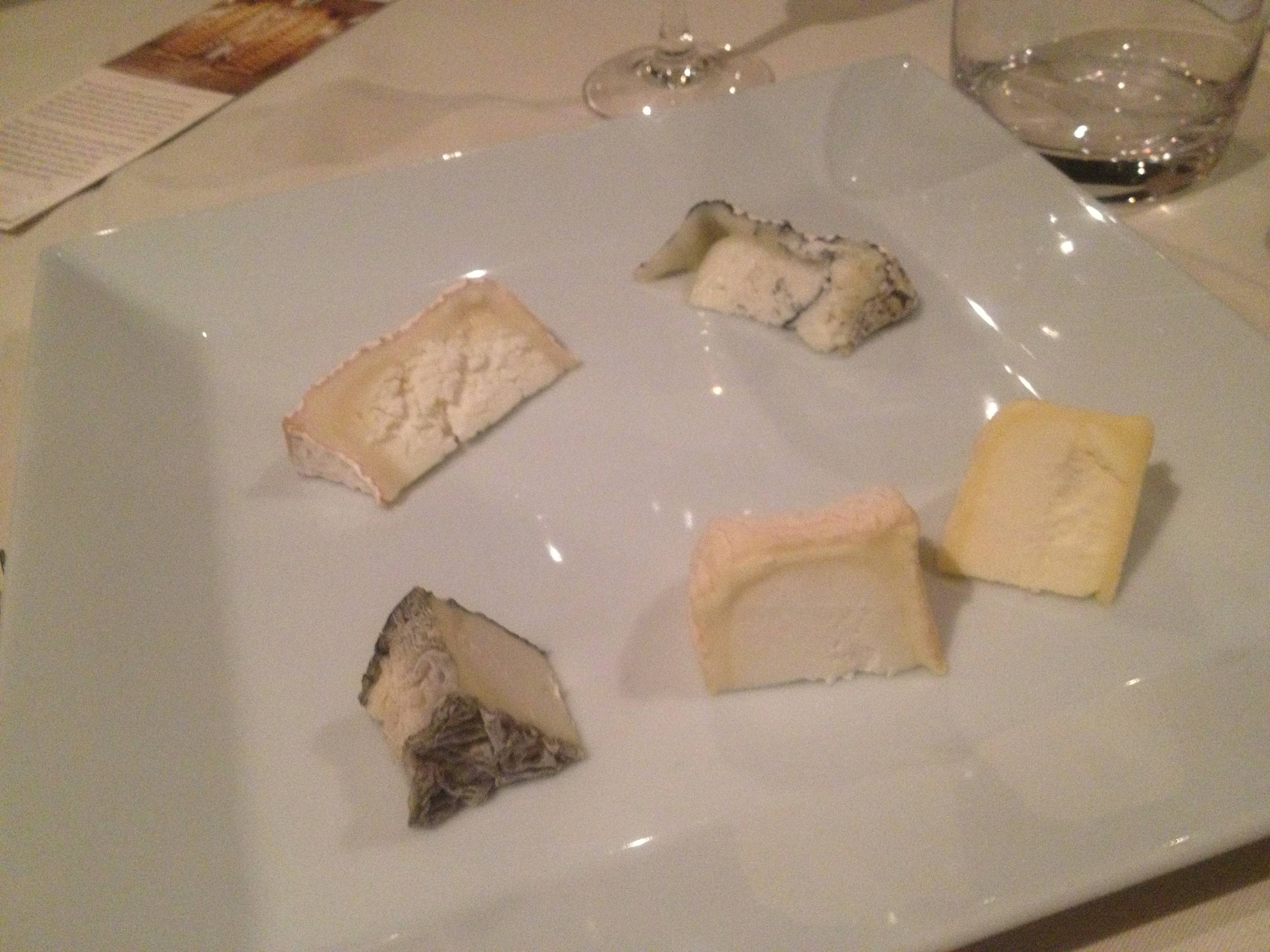 1st Cheese Flight:
 2nd Cheese Flight: